
El Mencho and paramilitary power in México By Dawn Marie Paley
Dawn Paley responds to the recent murder of Nemesio Ruben ‘El Mencho’ Oseguera Cervantes on February 22, 2026 and the reaction by Cártel de Jalisco Nueva Generación (CJNG) and other paramilitary groups. Providing review and analysis, Paley asks: Can we stop with the cartel narratives already?
*Originally: https://dawnpaley.substack.com/p/el-mencho-and-paramilitary-power
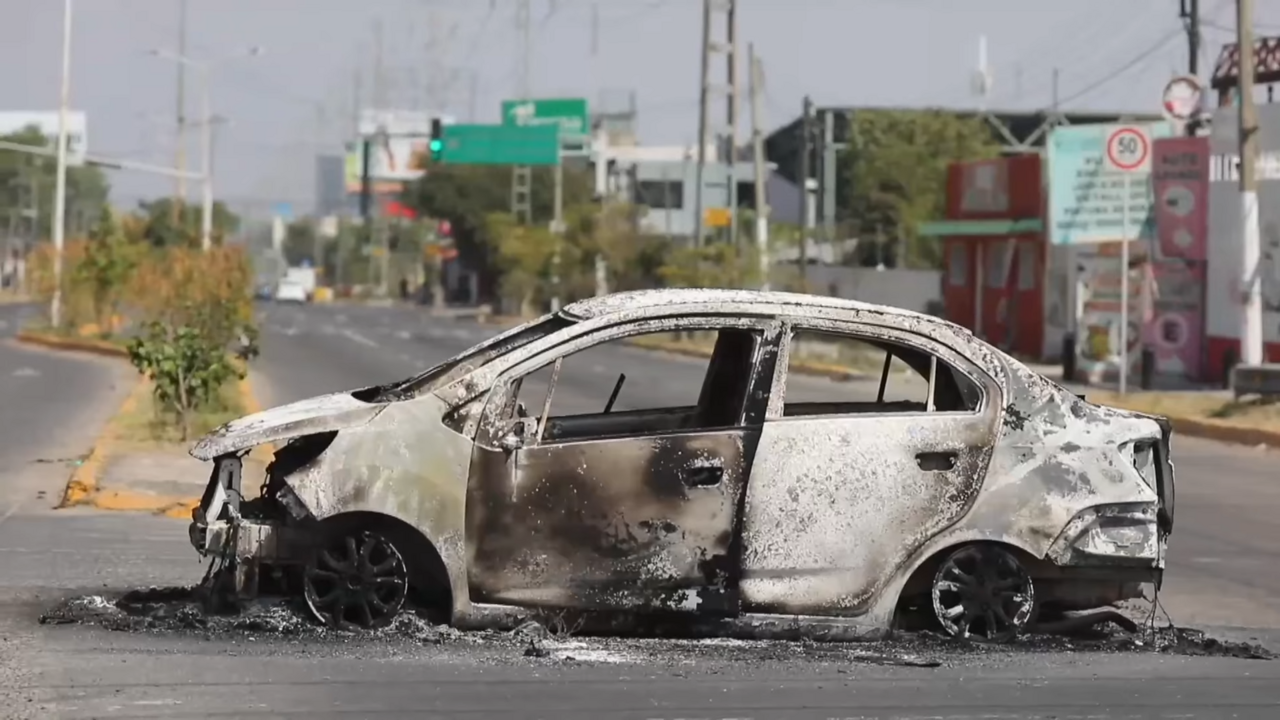
Photo: A burnt out car in Jalisco, Mexico, after February 22, 2026 attacks by the Jalisco New Generation Cartel in retaliation for the killing of El Mencho by La Prensa Gráfica Noticias de El Salvador
I started getting texts from friends and acquaintances around the world on Sunday afternoon. Was I alright? Had the violence in Mexico finally exploded into full on civil war?
That morning, Nemesio Ruben ‘El Mencho’ Oseguera Cervantes had been killed by Mexican special forces in an operation backed by a new US military force. As the day went on, there were at least 252 road blockades and hundreds of arson attacks around the country.
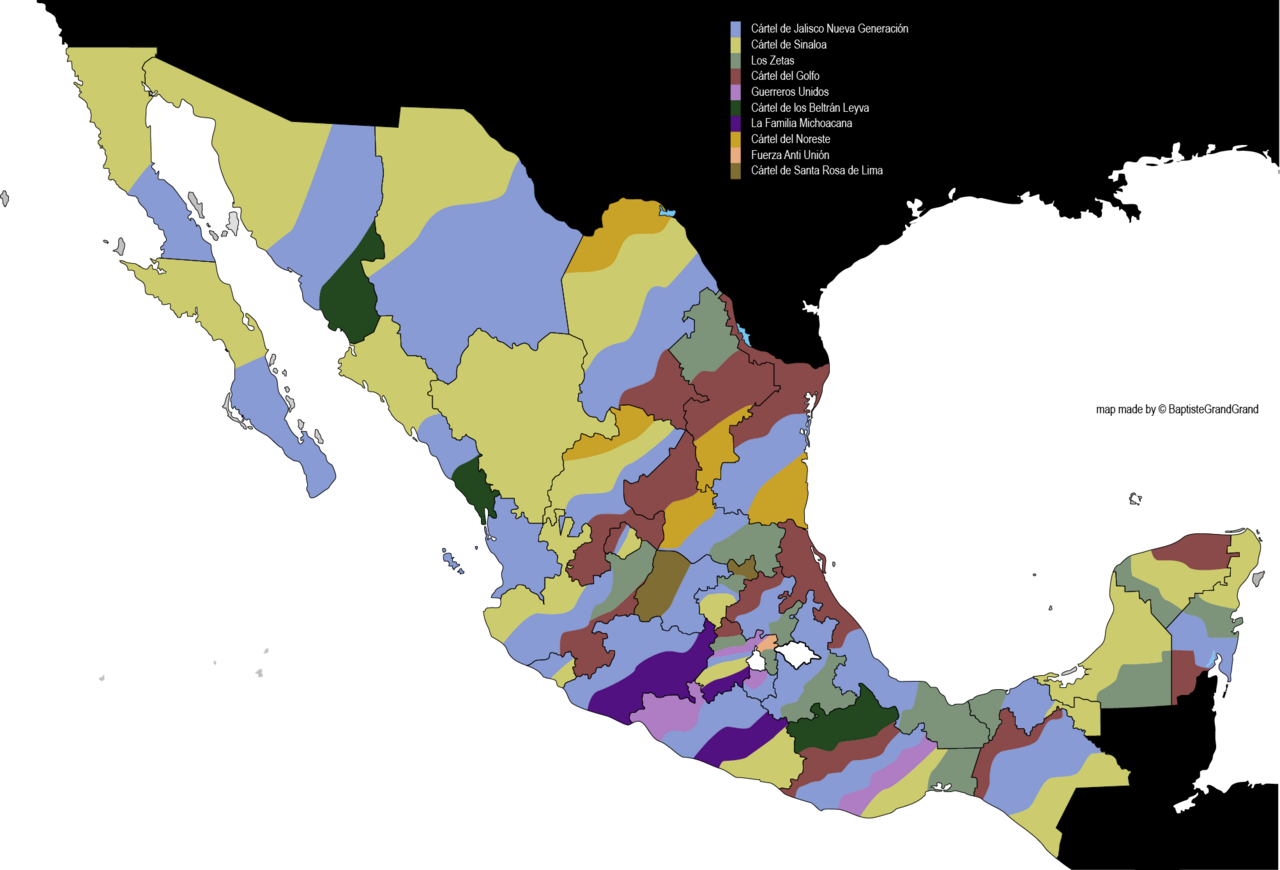
Photo: Mexican criminal organizations presence in 2020, according to the Mexican Secretariat of Finance and Public Credit.
Major events rarely occur in an even manner in México, and what took place after the capture of El Mencho was no different. At least 65 blockades as well as serious arson attacks took place in Jalisco, the state where El Mencho was captured, concentrated in Guadalajara and nearby municipalities as well as Puerto Vallarta.
The Jalisco government said Monday that 57 people were killed: 30 presumed members of criminal groups, 25 national guard soldiers, a state prosecutor and a civilian. In Michoacán state, which borders Jalisco, there are reports of at least five more fatalities. In this region, the attacks, blockades and arsons could feasibly be considered a form of retaliation for the capture of El Mencho.
But what took place in the rest of México on February 22 is more diffuse and confusing.
Media reports suggest a cartel response that reaches from the south border (Tabasco, Yucatán) and stretches through the center of the country all the way to the north border (Baja California, Tamaulipas). The travel advisory issued by the US State Department suggested US citizens shelter in place in Jalisco, Tamaulipas, Michoacán, Nuevo León and Guerrero states. In Mexico City, it was a grey Sunday like any other.
Far from a show of cartel strength, the actions in the rest of the country were highly symbolic, defined less by challenging the state and more by provoking fear among the population and providing the flashy visuals we’ve all seen on social media. Oxxo convenience stores, grocery stores, government run banks, and vehicles parked across roadways were set ablaze. All of these actions demonstrate the presence of paramilitary structures mobilized following the killing of El Mencho.
For over a decade, I and others have been working to shift our understanding of armed groups in México away from one of fetishized cartels operating in a manner that’s purely antagonistic to state forces, toward the idea of paramilitary groups. This discursive shift allows us to move away from the state vs. cartels narrative pushed by Washington and México City toward a more nuanced and grounded understanding of a military-paramilitary system created through interconnection, cooperation and friction between state forces and non-state armed groups.
The images from Sunday showed México on fire. They suggest a country at war, which is in fact very true. But what’s crucial to understand is that this war has taken over half a million lives through homicide or disappearance since 2006. This is a war that has been bolstered and funded by PAN, PRI and Morena administrations and their Republican and Democratic counterparts. And it’s a war in which México’s armed forces are the most powerful actors, by a longshot, even though they are sometimes falsely portrayed as underdogs against powerful cartels. By way of example, on February 22, there were 7,000 soldiers deployed in Jalisco state, in addition to national guard troops, marines, and police forces.
It is well established that “beheading” criminal organizations—as in the capture of El Mayo in Sinaloa in 2024, or the killing of El Mencho on Sunday—breeds more violence. The cost of that violence is borne by workers, migrants, and the poor. More than a show of criminal power, the latest round of flaming Oxxos and road blockades demonstrate how militarizing prohibition feeds a cycle of violence that constantly mutates and creates new internal enemies that the state then seeks to suppress through force. It’s hard to believe that repeating the ‘kingpin’ method (I can’t bear to call it a strategy) is anything other than means to stoke more violence, under the careful watch of the US.
The suggestion is that México can only be governed through securitization and militarization. Official discourse around security will become more aggressive, which could bring México City into closer alignment with the Trump administration. Last year the US designated the Cartel de Jalisco Nueva Generacion and others terrorist organizations (though the language of terrorism is notably absent from Mexican media coverage to date).
Speculating on the motives of those who carried out these acts only generates more confusion (not that that’s stopping the pundits, or even slowing them down). To make things worse, there’s a flood of manipulated information circulating online—including in reputable media.
Two days after the capture of El Mencho and the blockades that ensued, life appears to have returned to normal in most of the country. The army and the government are presenting this as a victory, and the news cycle will soon move on. I can promise there won’t be any high-level reflection on the impacts of the security policies put in place this week, nor will there be apologies or inquests if violence flares.
Instead, there will be another boogeyman, a different cartel, an even more dramatic capture, and more cars on fire. This war also depends on our constant forgetting.
Edited by Jared Olson.