
A letter from the Abyss: Forest occupation in Southern Norway celebrates two months of struggle against the state, the military, and their world
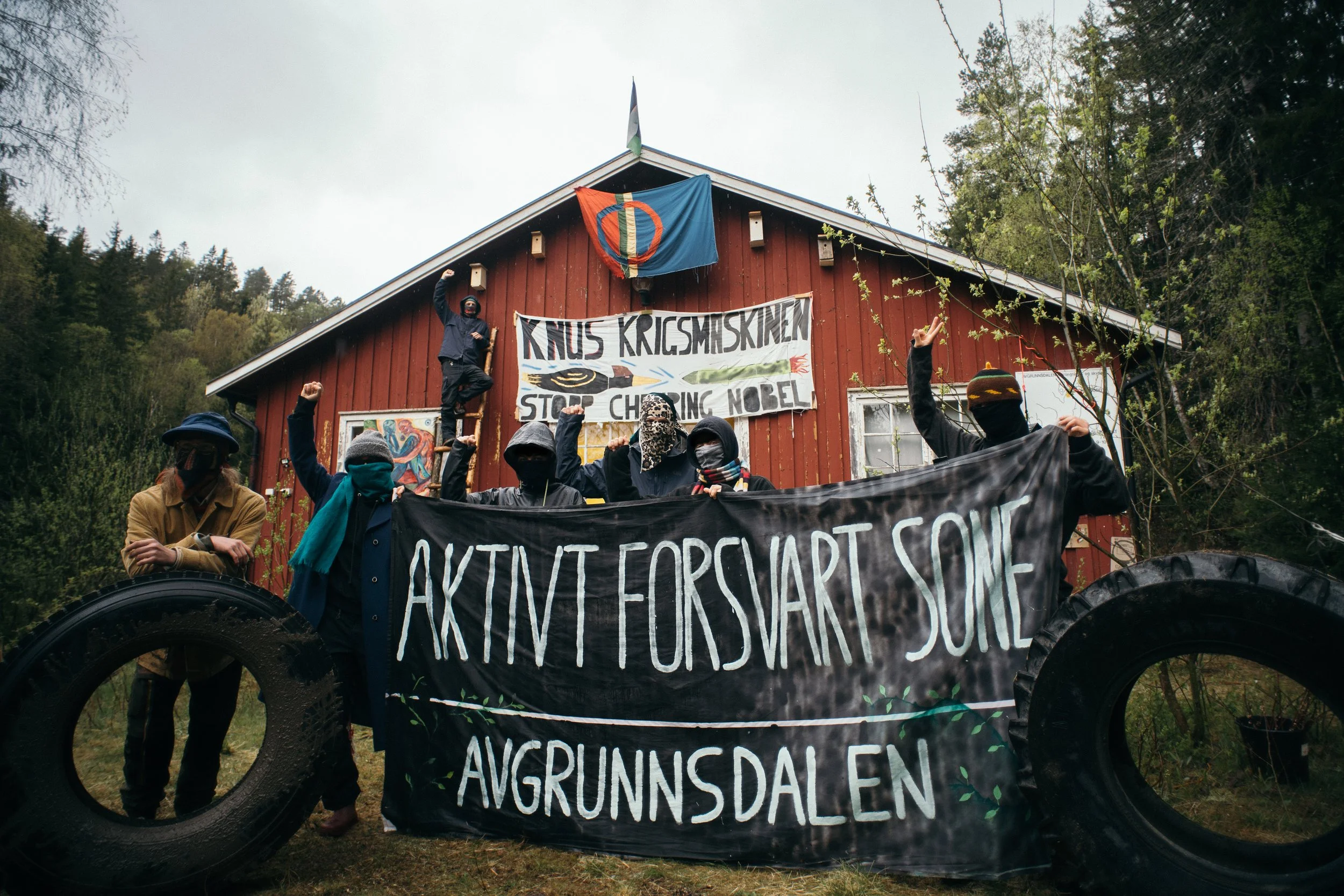
On April 2nd we established an “Aktivt Forsvart Sone” – AFS (Actively Defended Zone) in the abandoned military barrack in Avgrunnsdalen (“valley of the abyss”) in the midst of a forest called Hurummarka. Located about three public transport hours southwest of Oslo on the Hurum peninsula, the valley is at the the center of an area planned for Europe’s biggest explosives factory. Through living in the barrack and the surrounding trees we actively defend the forest and its inhabitants against the Norwegian and international defense industry. If built, this factory would become an essential part of the Western military industrial complex. Among other things, it would be the biggest producer of Octogen (HMX), a key component in modern military equipment. We will stay in Hurummarka, until this factory is not built. Knus Krigsmaskinen! Smash the war machine!
Peace or war by other means? Norwegian complicity in genocide and ecocide
Norway’s image as a “peace nation” is a big part of many Norwegians’ extensive national pride. But besides awarding a US-government-funded far-right coup leader with the Nobel peace price, what else does Norway do to contribute to peace in a world of rising geopolitical tensions? It increases the production of military explosives to supply and profit off the military industry’s bloody wars.
The company behind the new factory in Hurummarka is Chemring Nobel, 100% owned by the British Chemring Group. Blackrock - the world’s largest investment firm, which pours billions into socially and ecologically devastating companies - is one of its major shareholders. Chemring Group itself occupies a distinct and specialized niche within the global defense, security and aerospace industries, supplying 85% of NATO's air fleets and 60% of its naval fleets.
A new factory in Hurummarka would expand production capacities of the existing factory near a town called Sætre, about 20 minutes east of the AFS. While the dominant argument is, that increasing the production of explosives is necessary for national security, self-defense, and peace through deterrence, 30-40 percent of Chemring Nobel’s production in Sætre goes to private customers in space and industry, such as Elon Musk's SpaceX. The rest, 60-70 percent, is delivered to the defense industry and foreign militaries, including US companies like Lockheed Martin and Northrup Grunman. Both companies produce the missiles, fighter jets, bombers and radar technology used on killing civilians in Iran. The products manufactured in Sætre today are, as Chemring Nobel publicly admitted in 2023, essential components of Hellfire missiles which are moreover used in the genocide on Palestinians. Similarly, Nammo (short for Nordic Ammunition Company), another big player in the Norwegian military industry, delivers to the settler colonial project of so-called israel, by supplying the US government and (via subsidiaries) the largest israeli weapons producer, Elbit Systems. In 2024, Chemring Nobel and Nammo secured themselves a 12-year agreement with German Diehl Defence, a close partner of Elbit Systems. Through this contract, Nammo and Chemring Nobel will supply the German government and its “allies”, aka the US and israel, with 155mm munitions. Nammo’s technology to produce these munitions, relies solely on Chemring Nobel as the only qualified supplier of MCX material.
In other words: Chemring Nobel’s products are critical to the US, German, and israeli military industry. This makes the planned factory in Hurum a relevant target to fight against the material foundations of rising fascism, genocide and ecocide. With this background, Norway’s image as a peace nation and a forerunner of sustainability inevitably unravels itself as nothing less than the result of lots of war- (and oil-) money pumped into sophisticated marketing.
Two months of living in Avgrunnsdalen
Here in Avgrunnsdalen, the immediate threat and destruction are less apparent than they would be next to an opencast coal mine. Besides some smaller clear cuts, one is surrounded by a dense and partly old growth forest. Swamps glitter in the afternoon sun, mosses of all sorts exist, and blueberry bushes thrive as far as one can see. Ravens, wild geese, and cranes seemingly greet the house good mornings, and at 4am, the sun rises in-sync with a concert of countless voices.
Yet, the air around is also filled with the sounds of gunshots from neighboring shooting ranges, as well as the sounds of several (military) helicopters passing by each day. The stream dripping right next to our house, and more or less the entire valley, is poisoned with led and other chemicals from over 100 years of explosives testing, shooting exercises, and a leaking chemical dump site nearby. The next-door Oslofjord tempts us to dip into its blue waters, yet it is dying, not least because of several chemical spills caused by Chemring Nobel in the last years.
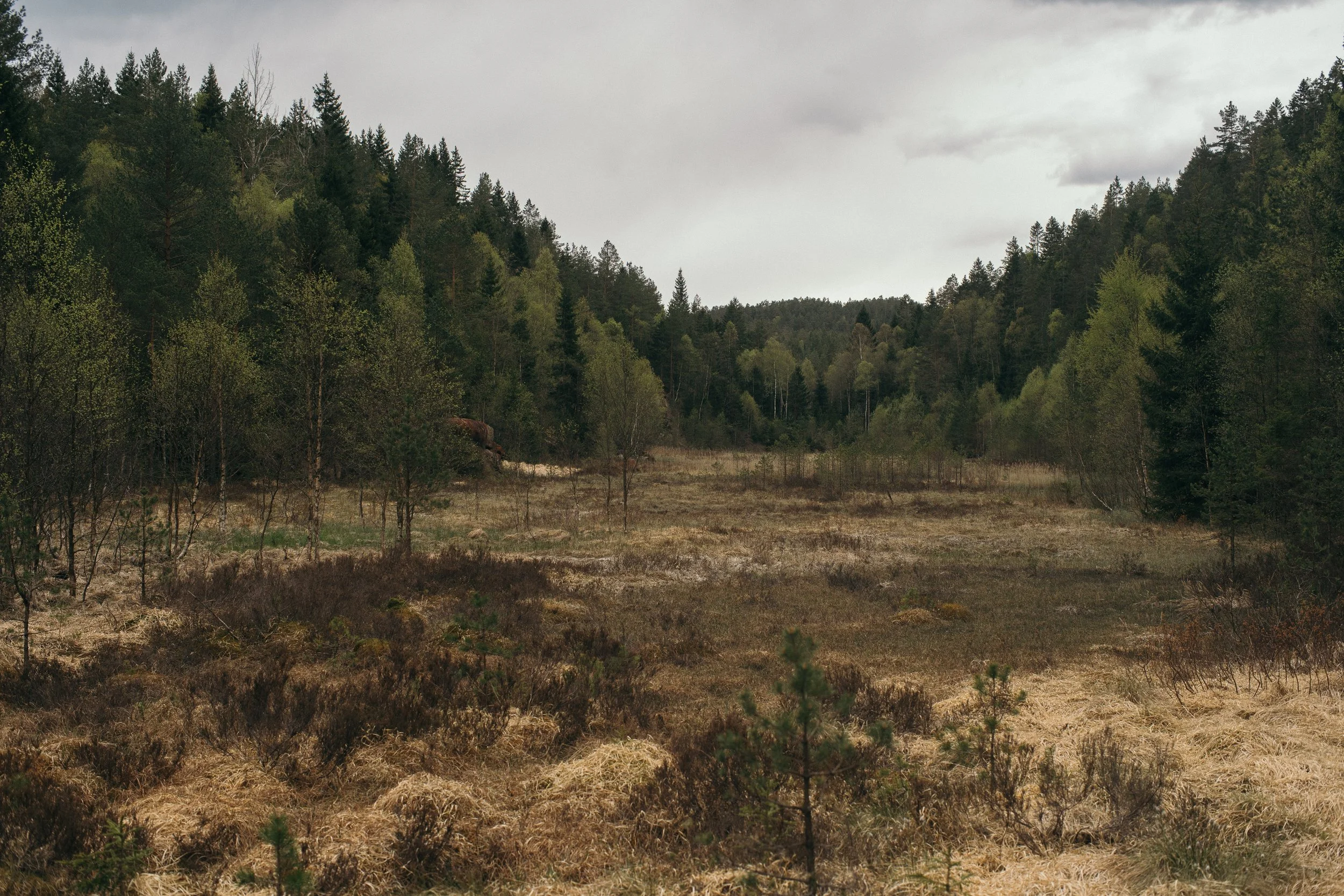
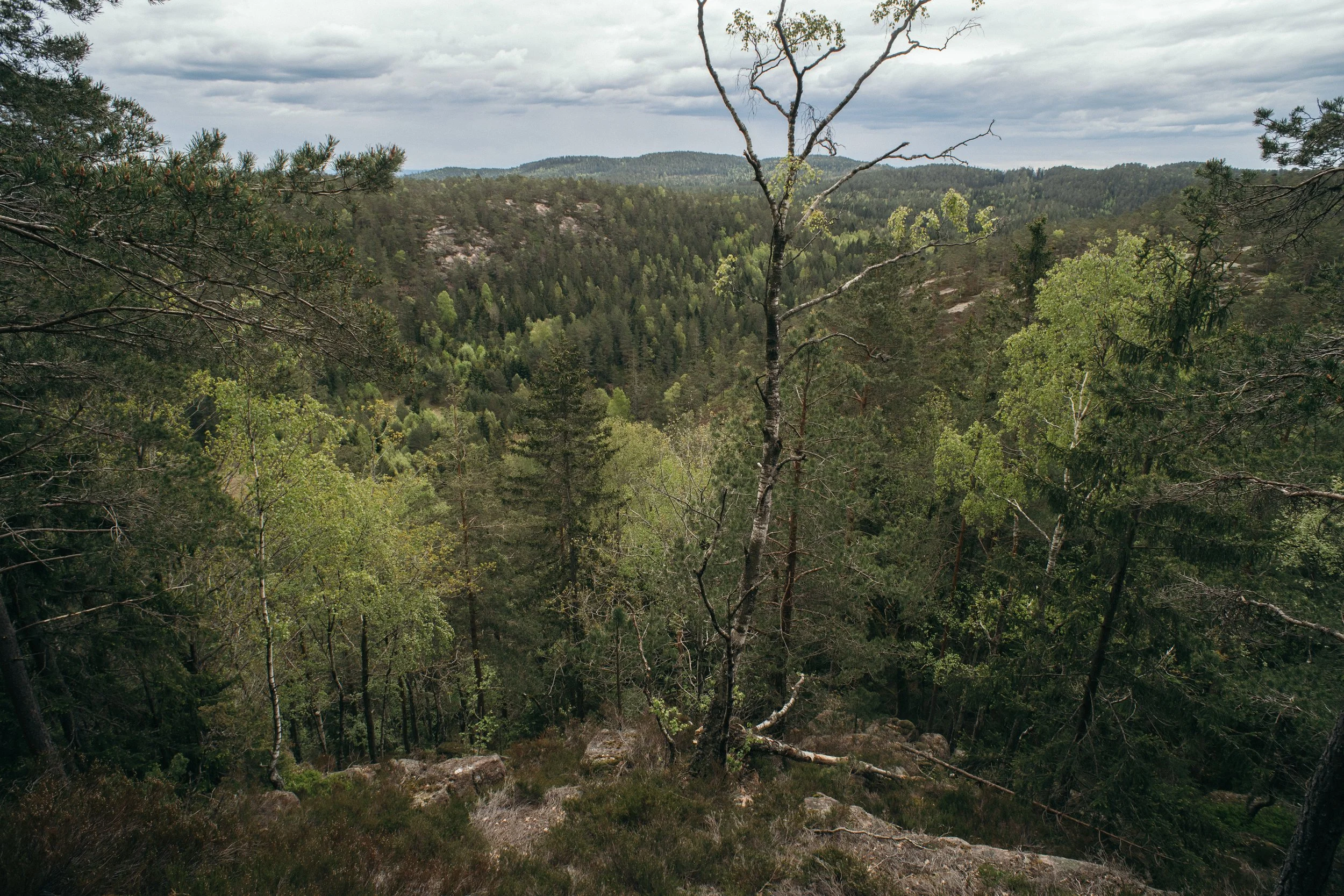
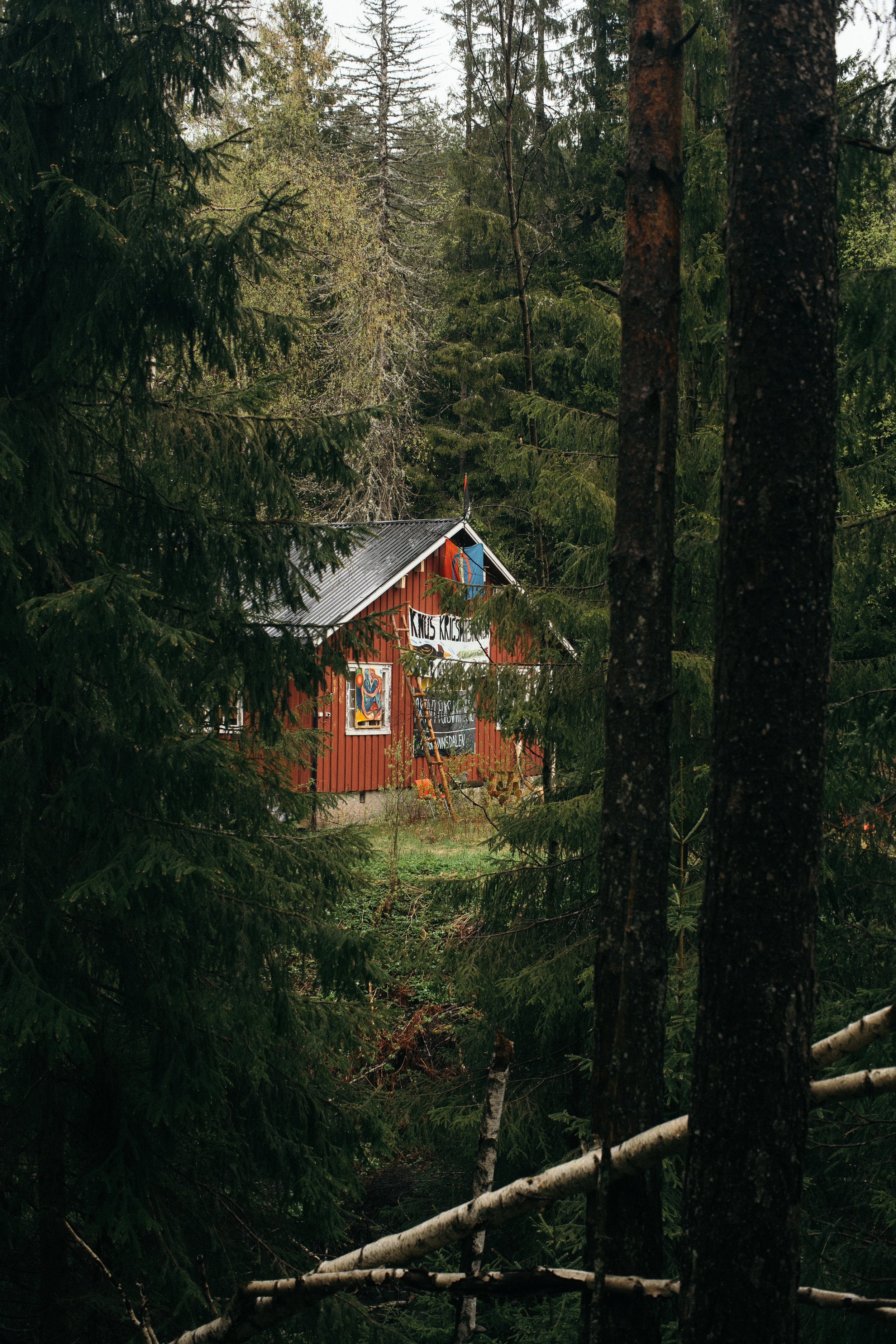
You have to be attentive to feel the heaviness of this ecological ruin and its connection to the horrors of war. Nevertheless, Avgrunnsdalen has become a vibrant space of active resistance against the war machine and all its dimensions of settler colonialism, white supremacy, extractivism, and ecocide.
Of course, there has been resistance before we moved into the forest. The peace group Fredslaget from Oslo brings in a strong anti-militarist critique against Norway’s war industry, but without a physical place to resist. The local citizen initiative Folkeaksjonen for Hurummarka focuses on the forest, but argues that the factory should be built at another place. Both groups engage in demonstrations, writing letters to authorities, and other ways of voicing their concerns.
But many people reject the factory entirely and distrust the authorities and their sham democratic process: arbitrary adjustments to the planning proposals, undisclosed information, reports based on data provided by Chemring, and the ministry of defense’s “open meetings” which resemble a competition of finding distracting answers to the questions of concerned locals, are only some examples. And so far, most of the larger media has been complicit in the state’s project of pushing through this factory: first by silencing both, the local resistance and the forest occupation, and then, by continuing to ignore the locals, but portraying us in Avgrunnsdalen as scary criminals. But as time passes by, the resistance only burns brighter.
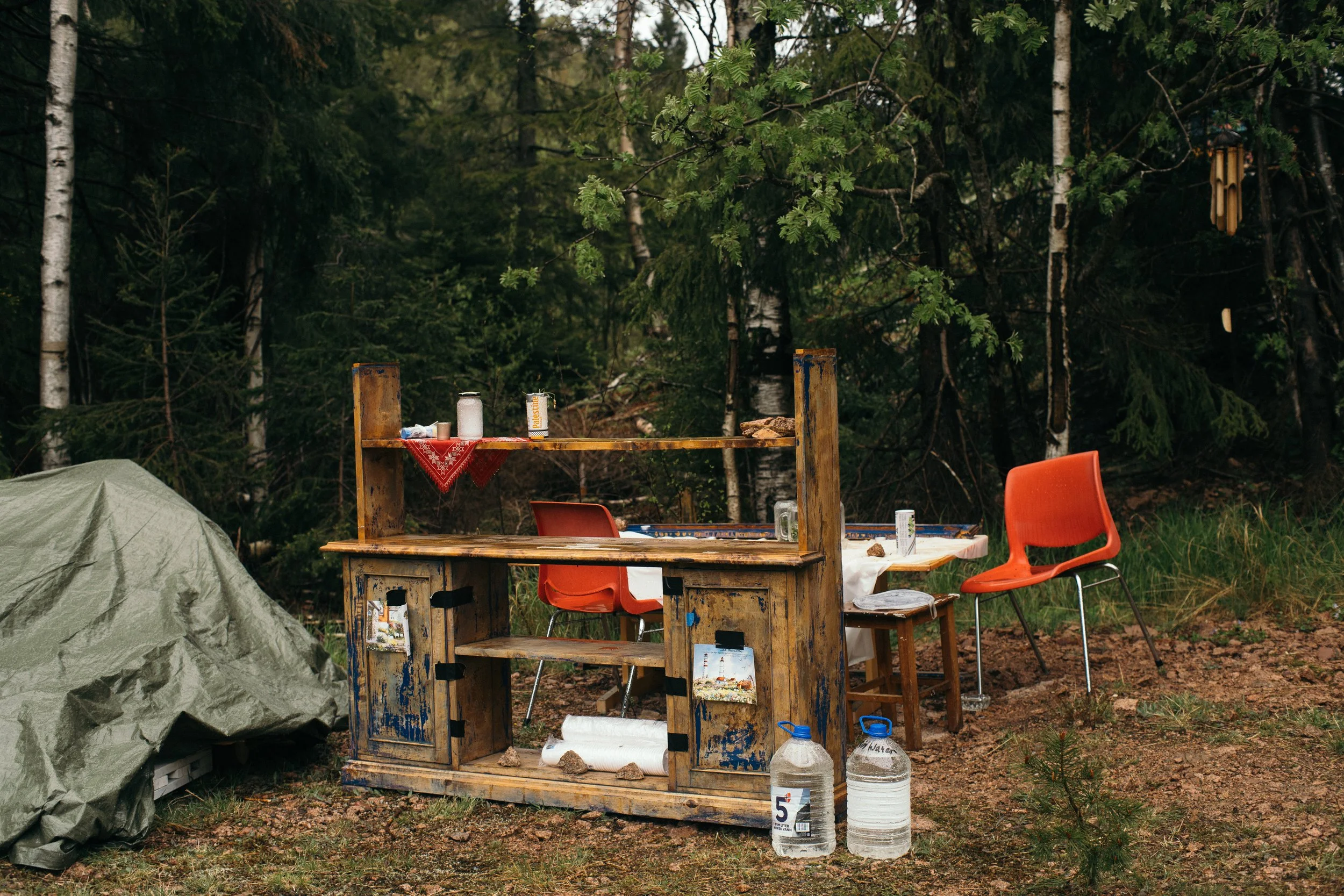
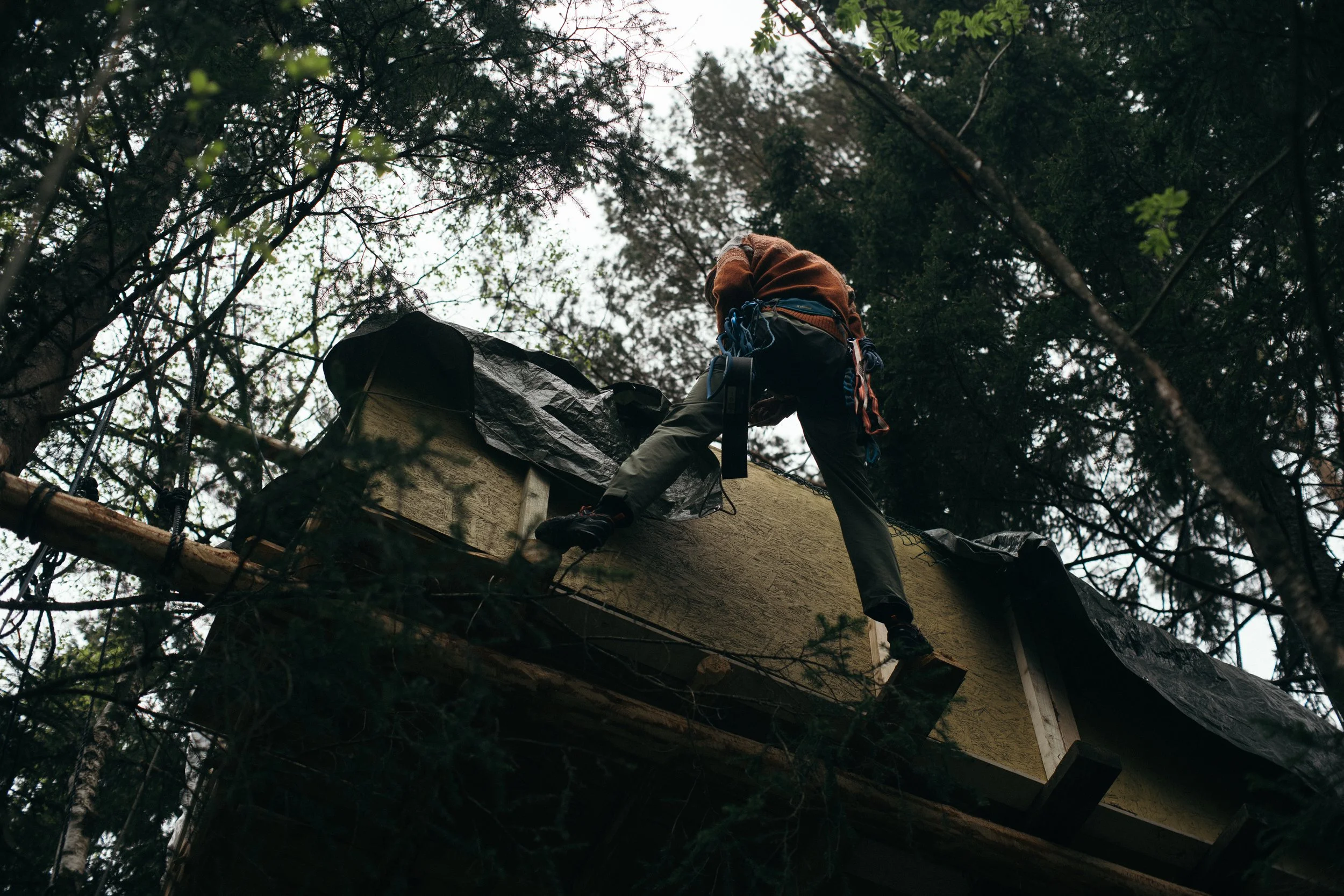
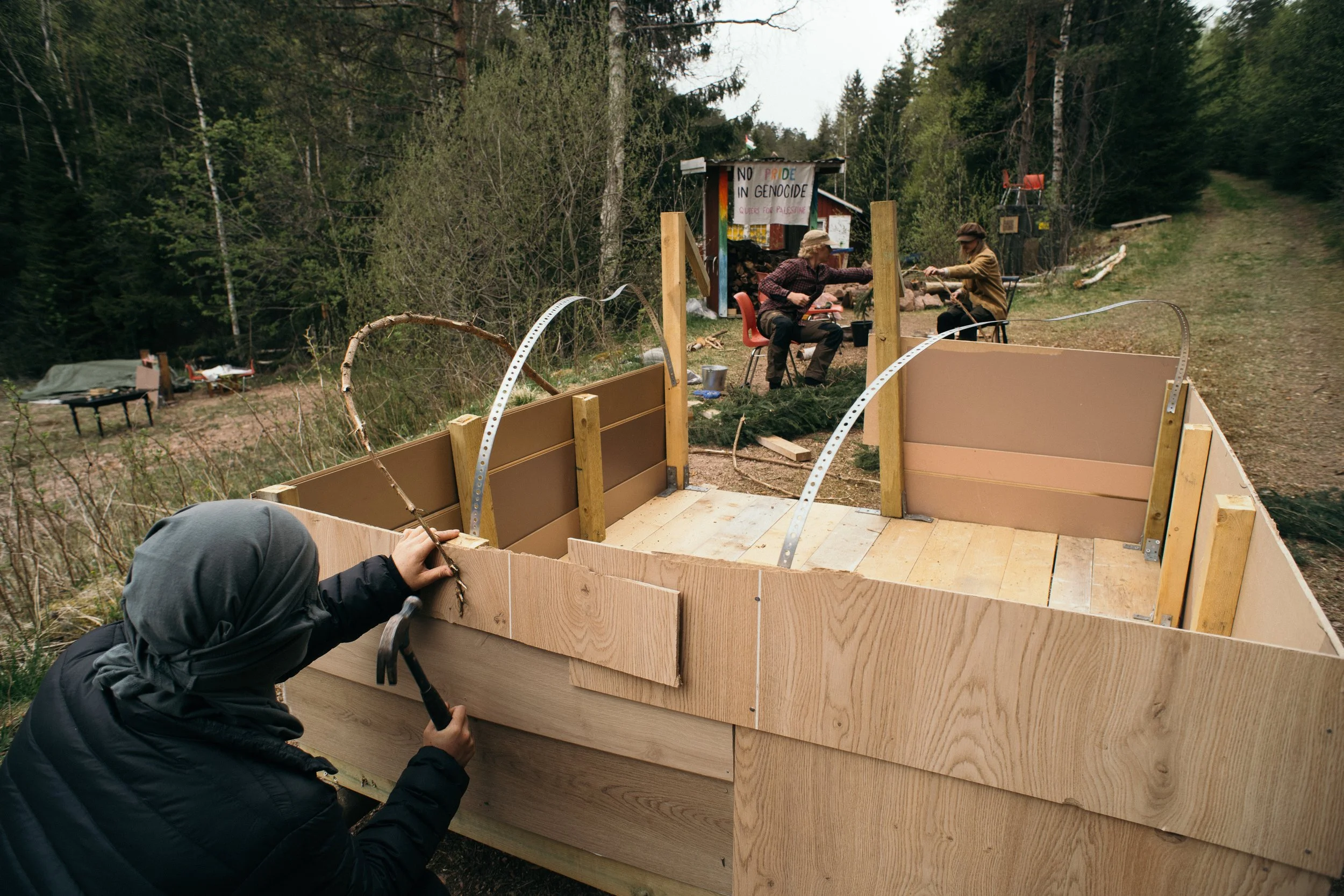
By squatting the forest, we root the struggle against this seemingly untouchable enemy in a physical space, connect people to the land, and open up concrete and creative ways of fighting against the factory. Within only two months, the community around Avgrunnsdalen has grown far beyond the people in the forest, as the countless visits, shared celebrations, mutual aid network, and open meetings with local and regional supporters show.
Looking ahead: Radical Politics and anti-colonial Solidarity
Radical politics, autonomous spaces, and political commitment are, sadly, a rarity in Norway and (it feels safe to say) across the Nordics. Anybody who has tried to organize themselves within autonomous and anarchist political groups up here certainly knows the feeling of loneliness. In Norway, this is partly thanks to official organizations and their liberal politics, sponsored by the Norwegian state or some philanthropists, who together dictate the rules for much of what counts as activism or political engagement. Even in Norwegian occupied Sápmi, people of the indigenous Sámi are told how to protest “correctly” (how ironic) – as a recent anonymous communique has criticized.
We need radical spaces and that’s why we bring them to life. We need to push the boundaries of resistance and protest beyond hierarchically organized and dogmatically non-violent civil disobedience that only appeals to those in power, towards a diversity of tactics, direct action, self-organization and - importantly – the possibility of attack. We also seek to connect rebels across Scandinavia and (northern) Europe, to support each other in living a life in resistance and solidarity.
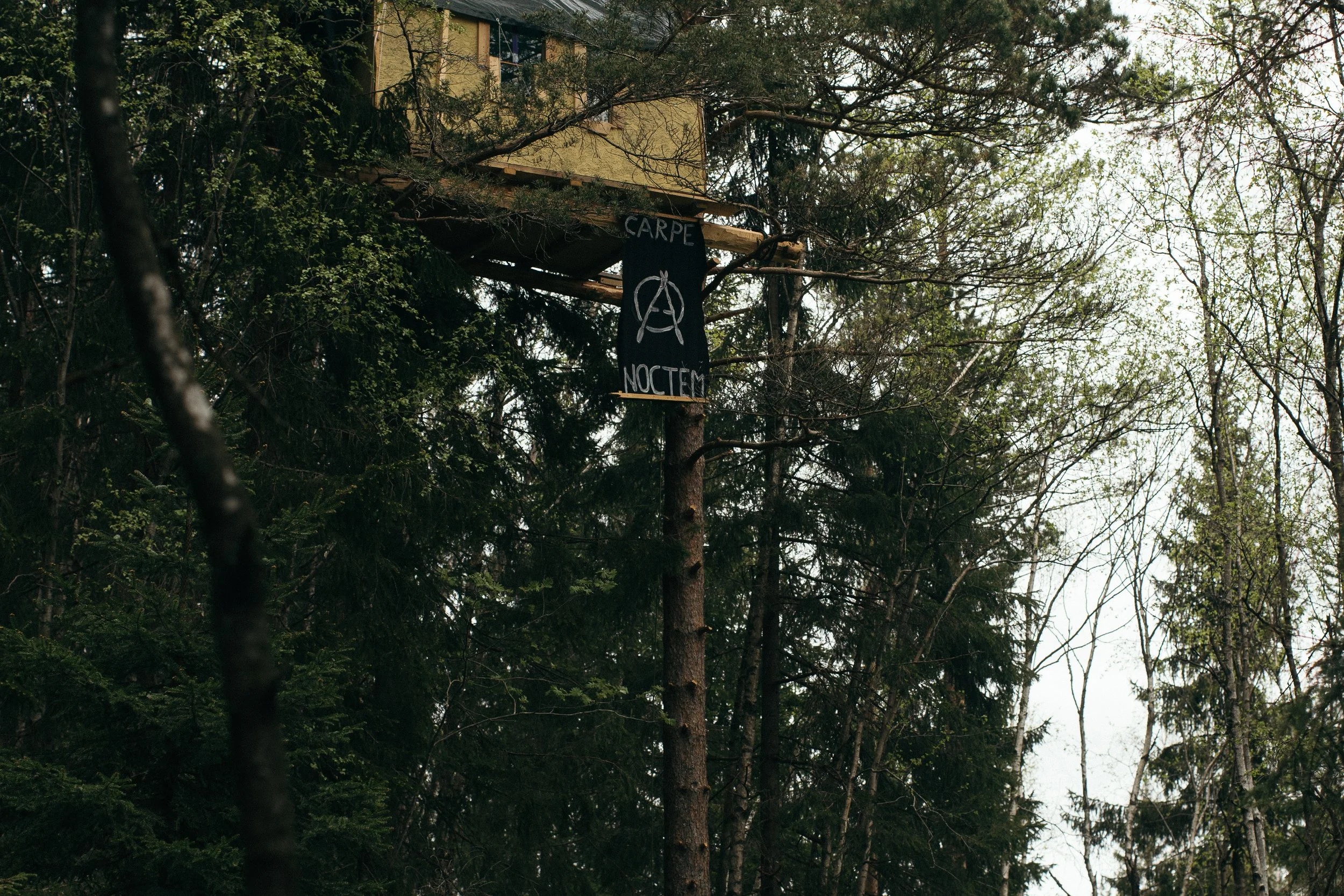
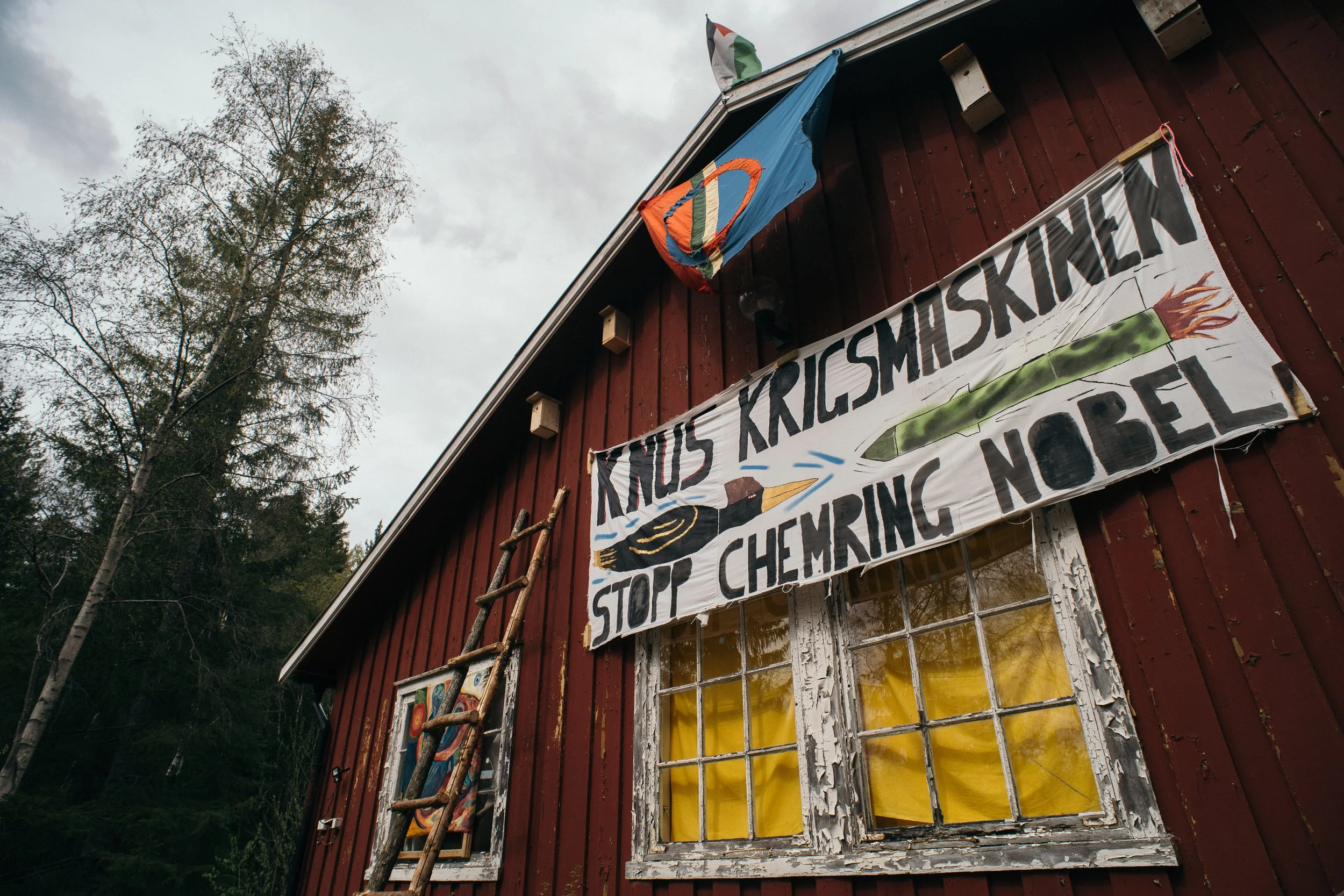
Besides standing with the people in Palestine, the people of Iran, and everybody else who suffers the unimaginable horrors of imperial aggression, Avgrunnsdalen is also a place of solidarity with Sámi struggles for land and life. For us, militarization in the south of Norway is closely connected to indigenous struggles in the north, where the Sámi have for too long been fighting against Norwegian colonization. As part of a larger move to rearmament, Chemring’s new factory would mean drastically increasing demands for energy and material, fueling the construction of ever more mines, wind factories, roads, and high voltage power lines, which already today attack Sámi ancestral territories. By resisting Chemring, we bring the struggle against Norwegian colonialism south, to the core of the colonial project.
For more info check our website or contact us via mail at knuskrigsmaskinen@disroot.org. To stay updated you can find us on instagram and telegram. Join us for our midsummer camp from 19th-28th of June!
Love and rage straight from the Abyss. Knus Krigsmaskinen! ČSV!
Thanks to Kelly for the wonderful photographs!